

Special Education Systems Are More Complex Than Most Districts Were Built to Manage
Compliance failures are rarely isolated errors.
They are system-level patterns—visible only when documentation, implementation, and oversight are examined together.
The Structural Reality
Special education systems are operating under conditions they were not originally designed to sustain.
Identification rates have increased.
IEP requirements have become more complex.
Staffing constraints and competing demands continue to expand.
At the same time, expectations have shifted.
Compliance standards are more explicit.
Families are more informed and engaged.
Documentation and implementation are more closely scrutinized.
These are not isolated pressures.
They are structural conditions that cannot be resolved through isolated fixes.

Where Risk Actually Lives
Special education risk does not sit in a single file, team, or decision.
It exists across three layers:
What is written
(IEPs and documentation)
What is delivered
(services in practice)
What is visible
(what leadership tracks and responds to)
Most districts assume these layers are aligned.
The gap between them is where compliance risk accumulates—
often without immediate visibility.
What Districts Often Miss
Most districts believe they understand their level of compliance.
That confidence is typically based on:
Individual file reviews
Staff reporting
Isolated issue response
What is rarely examined is whether those signals reflect the system as a whole.
In many cases:
Documentation appears compliant
Services appear scheduled
No immediate escalation is visible
And yet, gaps exist between what is written, delivered, and verified.
Those gaps are not visible without structured analysis.


Resurgence operates as an external analytical layer—
focused on how the system is functioning, not how it is intended to function.
This work is not merely file review in isolation, but rather system-level analysis.
Across engagements, this includes:
What Resurgence Does
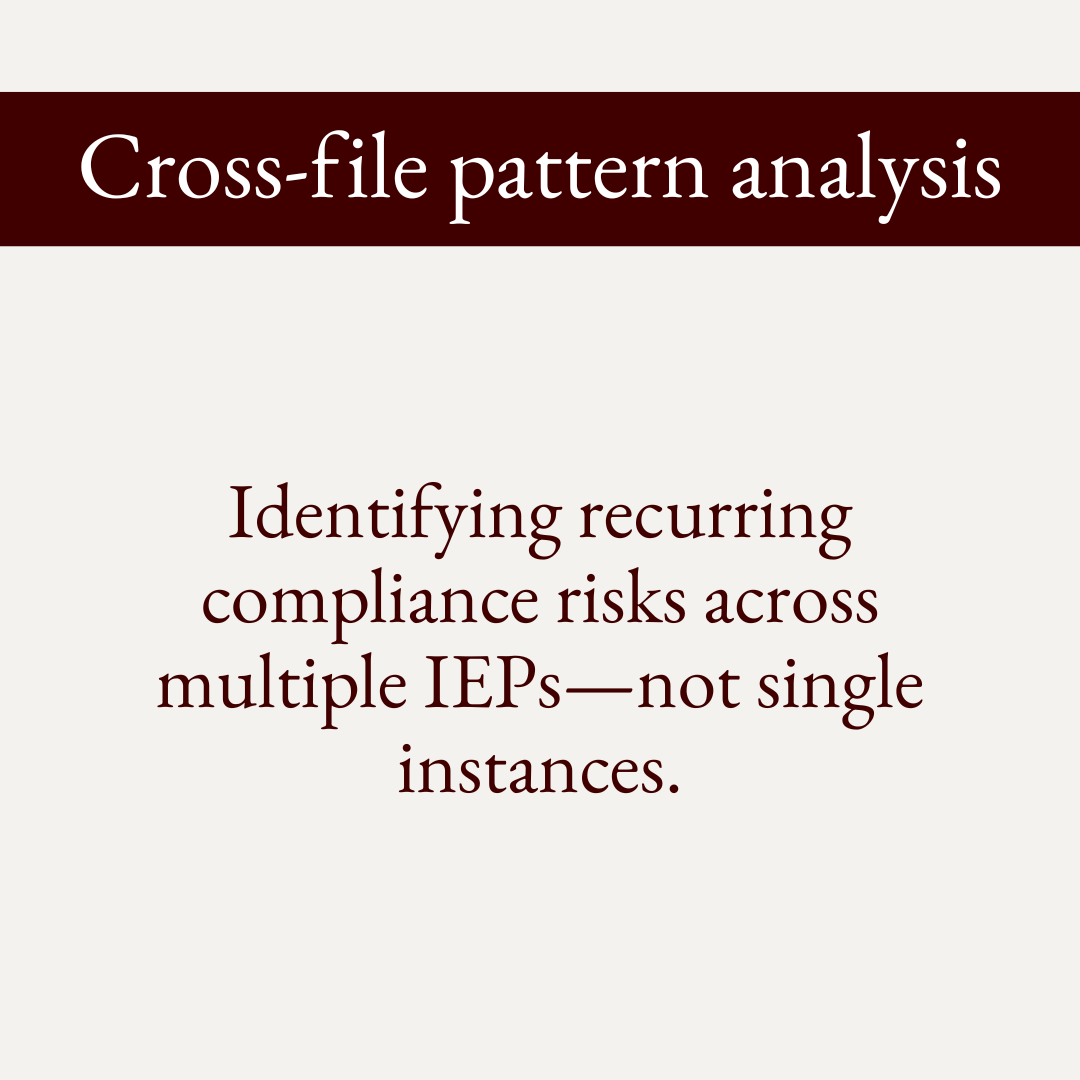
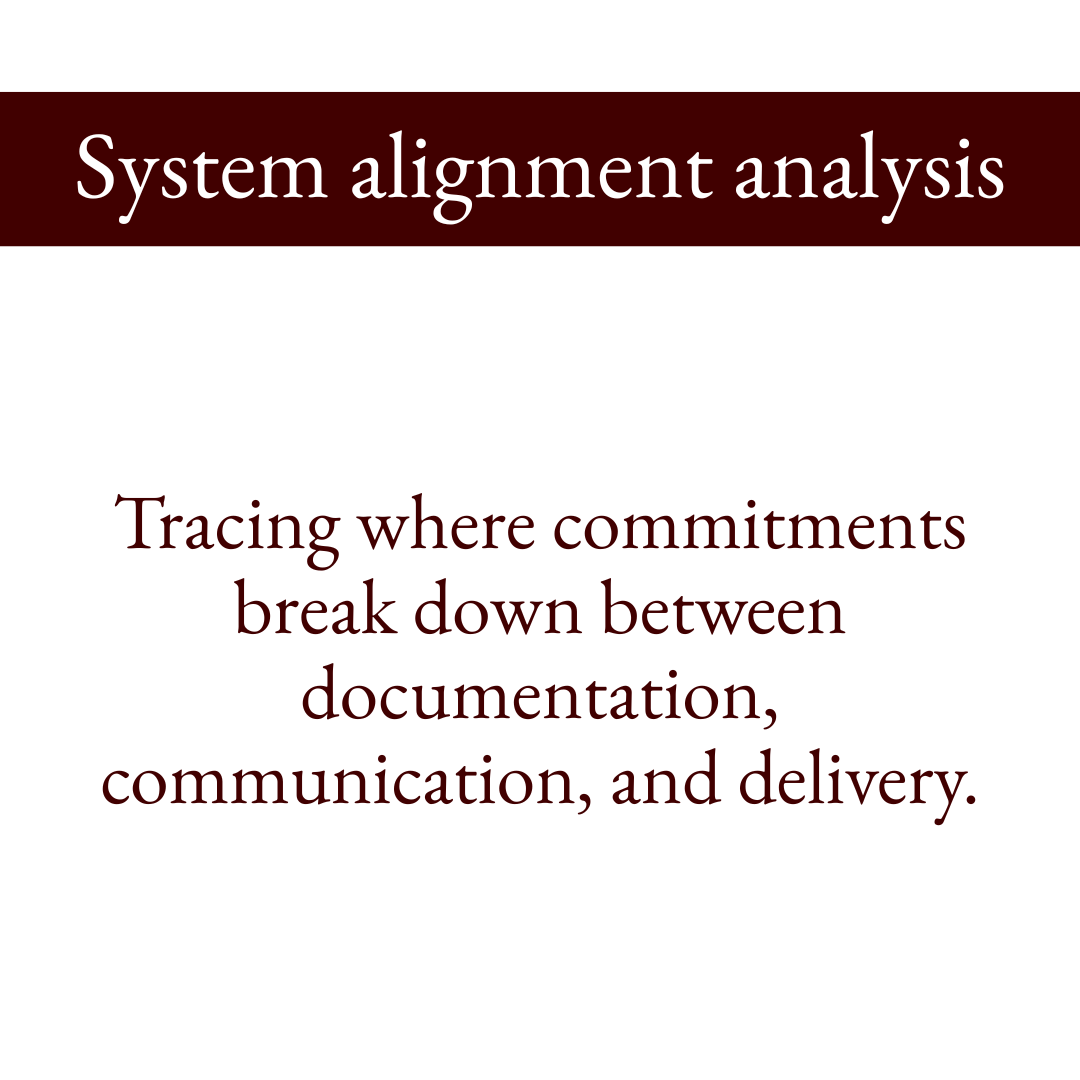
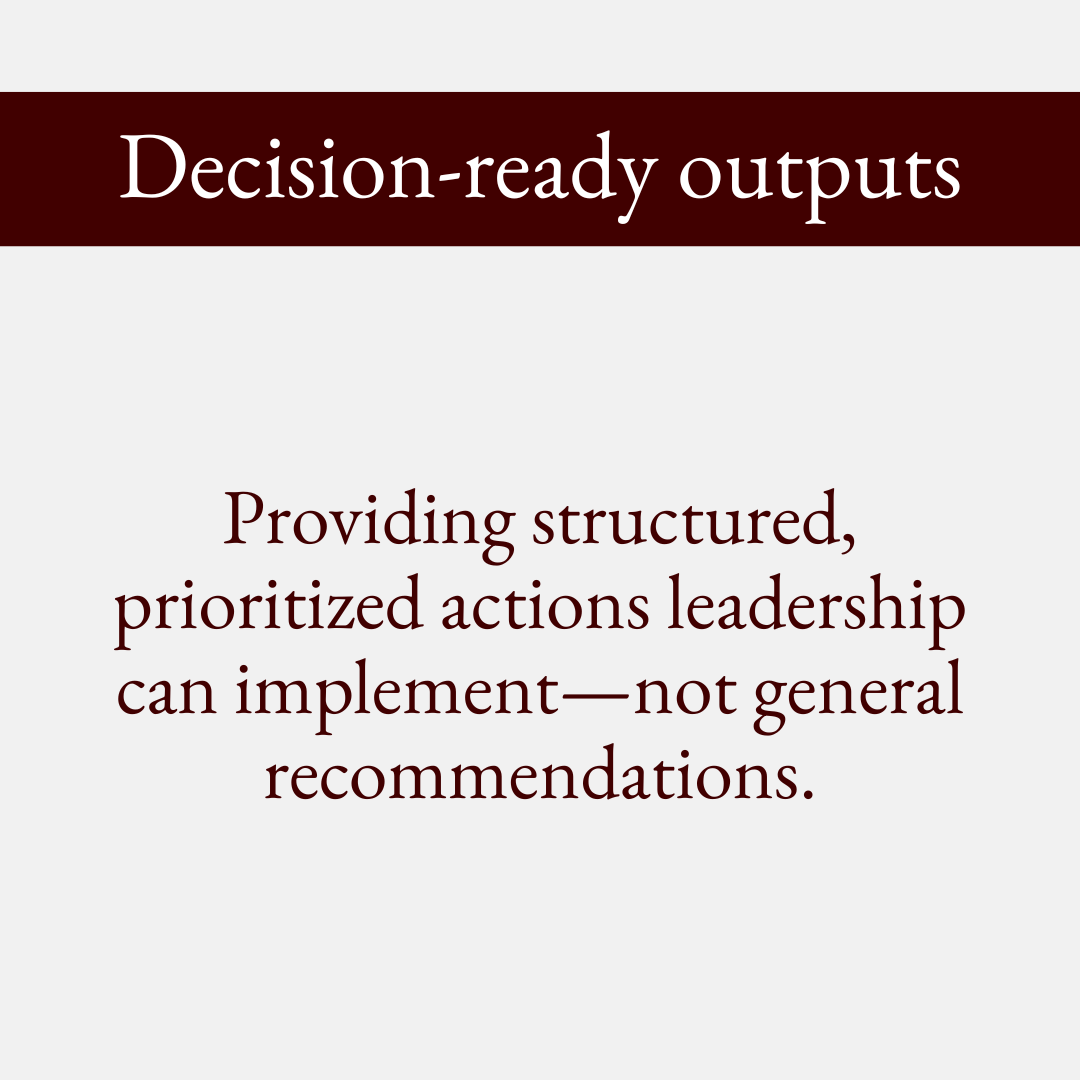
The work is designed to make system-level compliance conditions visible before they surface externally.

How Engagements Are Structured
Engagements are defined by what the system requires—not a fixed model.
In some cases, the work is diagnostic:
System-level compliance review across IEP samples
Identification of risk patterns and exposure levels
In others, the focus shifts to structure:
Communication flow between teams
Breakdown points between responsibility and execution
Where needed, the work extends into action:
Leadership debriefs that translate findings into sequenced decisions
Ongoing advisory support to track patterns over time